【世界遺産・法隆寺(ほうりゅうじ)を知るkey word】
<聖徳太子(しょうとくたいし)(574~622)>
用明天皇(ようめいてんのう)の皇子(おうじ)。叔母(おば)の推古天皇(すいこてんのう)を助けて国政を担い、十七条憲法を策定、遣隋使を派遣して大陸文化の導入に努めた。仏教興隆(こうりゅう)に尽力し、法隆寺や四天王寺などを建立。死後は”観音の化身”と言われて信仰の対象となり、10人の話を一度に聞き分けたなどの伝説が生まれた。
<飛鳥文化(あすかぶんか)>
飛鳥時代(7世紀前半)に起こった日本で最初の仏教文化。朝鮮半島を通じて伝えられた中国の南北朝時代の文化が強く影響しており、間接的にはギリシアや西アジアなどの痕跡もうかがわれる。建築では法隆寺の西院伽藍(さんいんがらん)、仏像では法隆寺や中宮寺などの諸仏が代表作。
<法隆寺>
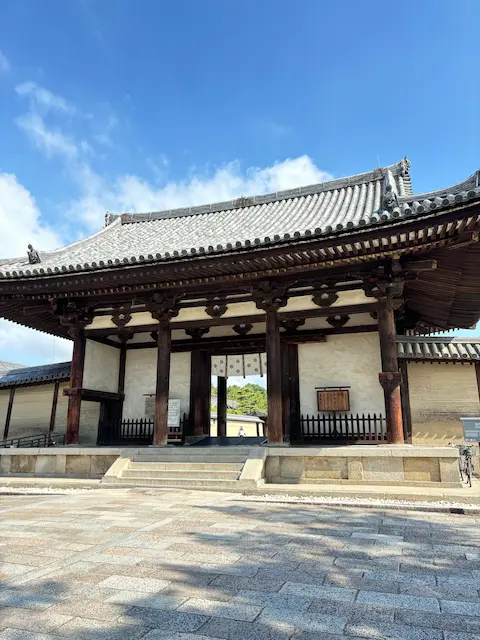
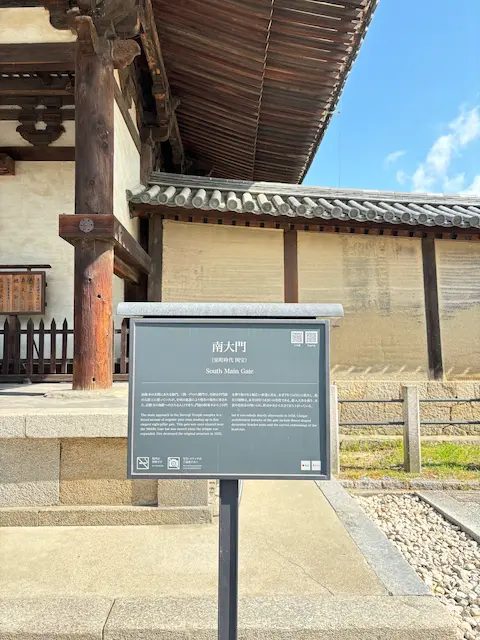
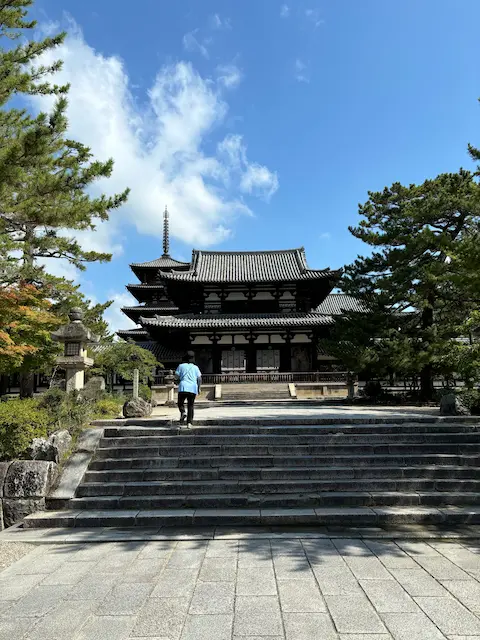
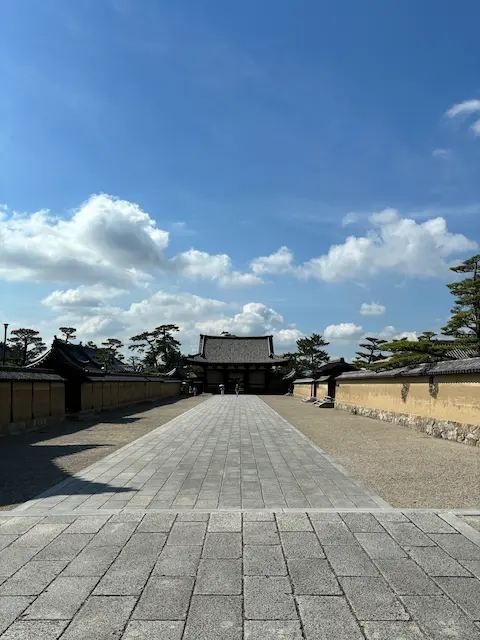
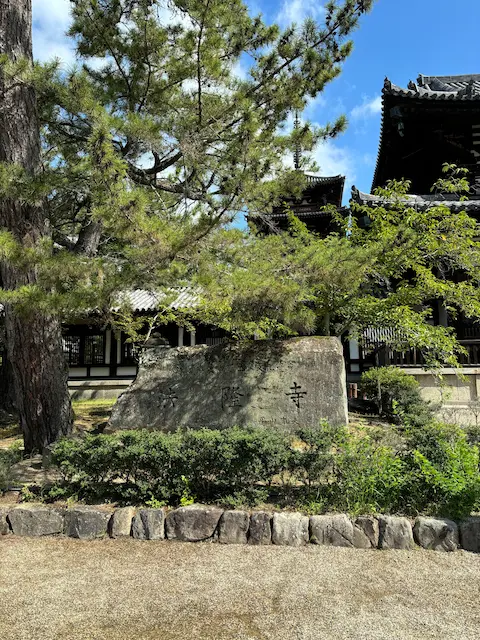
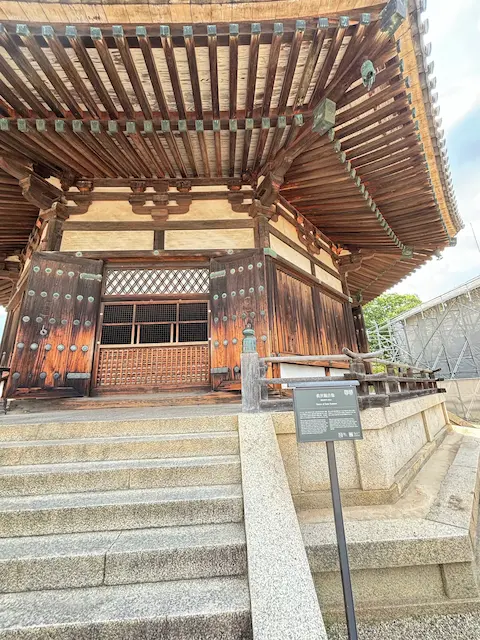
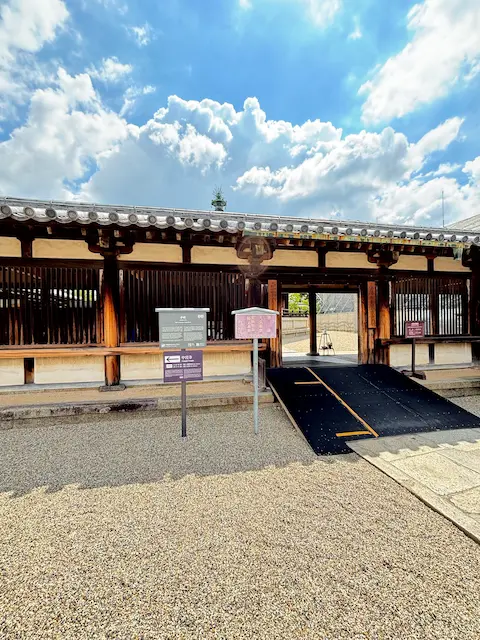
聖徳太子と推古天皇が7世紀初めに創建した。天智天皇(てんじてんのう)9年(670)の火災で伽藍(がらん)を焼失したが、ほどなく再建。その後、大きな災厄(さいあく)に遭わなかったため、飛鳥文化を伝える仏像や堂塔をはじめ、各時代の美仏教美術の傑作が残る。国宝・重要文化財は約190件、点数にして約3000点を数え、1993年日本で初めて世界遺産に登録された。広い境内は西院伽藍(さんいんがらん)と東院伽藍(とういんがらん)に分かれ、西院の金堂・五重塔などは、世界遺産に登録されている。
<正岡子規の句碑(くひ)>
柿くえば鐘が鳴るなり法隆寺。
日本で初めて世界遺産登録されたのが、法隆寺。奈良と言えば、日本の始まりの地ですよね。
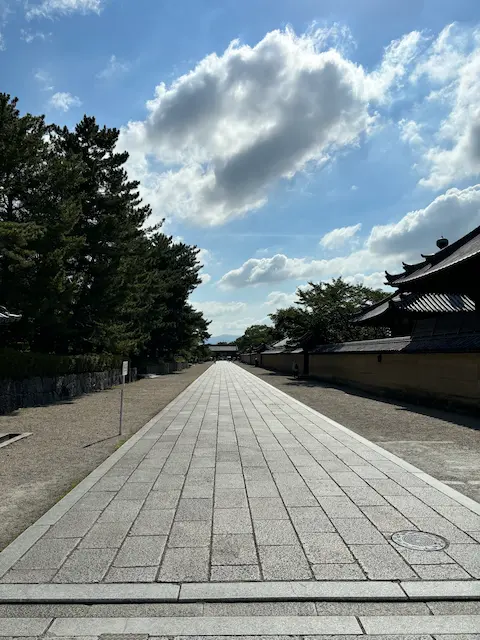
観光客のみなさんは、基本的に、奈良の鹿公園(春日大社、興福寺)のほうに、行かれる傾向があるので、ゆっくり観光できました。ほんと暑かったです。
法隆寺と言えば、正岡子規(まさおかしき)さんですよね。日本人なら、誰もが知ってる俳句ですよね。
少年時代の聖徳太子の像があったのですが、カワイかったですよ。
【Key Words for Understanding World Heritage Site Hōryū-ji Temple】
<shoutoku taishi(574~622)>
Prince of Emperor Yōmei. He assisted his aunt, Empress Suiko, in governing the nation, formulated the Seventeen-Article Constitution, and dispatched envoys to Sui China to promote the introduction of continental culture.
He devoted himself to the flourishing of Buddhism, establishing temples such as Hōryū-ji and Shitennō-ji. After his death, he became an object of worship, revered as the “incarnation of Kannon,” and legends arose, including one where he could distinguish ten different conversations simultaneously.
<Asuka Culture>
The first Buddhist culture in Japan, which emerged during the Asuka period (first half of the 7th century).
The culture of China’s Northern and Southern Dynasties period, transmitted through the Korean Peninsula, exerted a strong influence, and traces of Greece and West Asia can also be discerned indirectly.
In architecture, the West Temple Precincts of Hōryū-ji are representative works; in Buddhist sculpture, the various Buddha statues at Hōryū-ji and Chūgū-ji are representative works.
<Hōryū-ji>
Prince Shōtoku and Empress Suiko founded it in the early 7th century. In the 9th year of Emperor Tenji’s reign (670), a fire destroyed the temple buildings, but they were rebuilt shortly thereafter. Since no major disasters struck thereafter, masterpieces of Buddhist art from various eras—including Buddhist statues and temple structures that convey the Asuka culture—have been preserved. National Treasures and Important Cultural Properties number approximately 190 items, totaling about 3,000 pieces, and in 1993 became Japan’s first site to be registered as a World Heritage Site. The expansive temple grounds are divided into the West Precinct (San’in Garan) and the East Precinct (Tōin Garan). The West Precinct’s Golden Hall and Five-storied Pagoda are registered as World Heritage Sites.
<Masaoka Shiki’s no kuhi>
When you eat a persimmon, the bell rings at Horyuji Temple.
The first site in Japan to be registered as a World Heritage Site was Hōryū-ji Temple. When you think of Nara, it’s the birthplace of Japan, isn’t it?
Most tourists tend to head toward Nara’s Deer Park (Kasuga taisah, Kofuku-ji), so I was able to sightsee at a leisurely pace. It was really hot.
When you think of Hōryū-ji Temple, you think of Masaoka Shiki, right?
It’s a haiku that every Japanese person knows, right? There was a statue of Prince Shōtoku as a boy, and it was really cute.