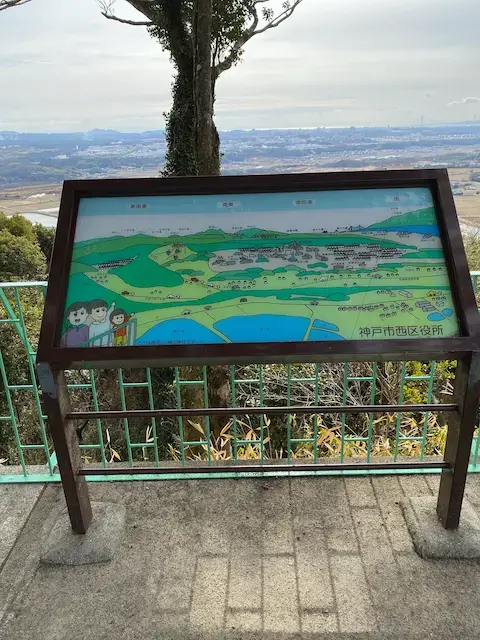
When it comes to New Year’s visits to shrines, it’s definitely Kan’nō-ji. I go every year. If you head further up from Kansai Gakuin University’s Uegahara Campus, you’ll find Kabutoyama Forest Park, a popular spot for dog walkers. Climb a little further up Kabutoyama Forest Park, and you’ll reach Kabutoyama Daishi, Kan’nō-ji Temple. The viewpoint here is truly spectacular. You can take in the whole of Osaka Bay. On clear days, you can even see the skyscrapers of Umeda and Abeno Harukas. The Kobe Shimbun newspaper featured a photo of the Yodogawa Fireworks Festival taken from the observatory at Kabutoyama Forest Park, so perhaps you can see the Yodogawa Fireworks Festival from Kannonji too.
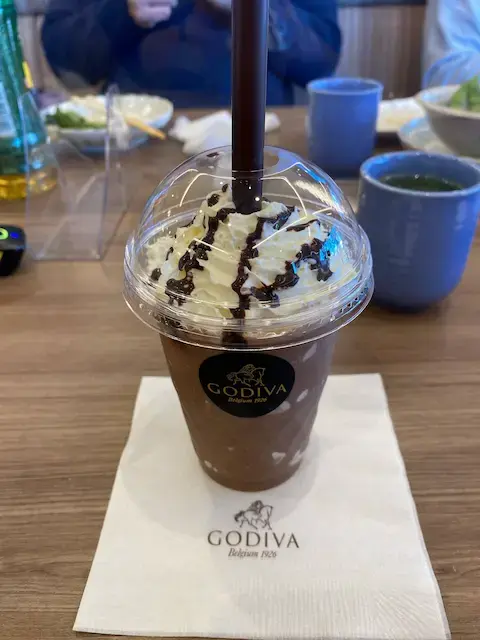
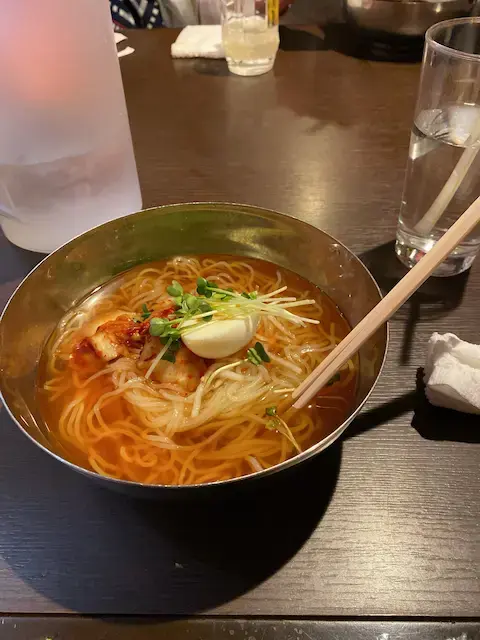
After visiting my grandmother’s grave, I enjoyed a leisurely meal of Sanuki udon and a Godiva chocolate liqueur at Pokapoka Onsen. On the way back, the motorway through Awaji Island was congested, so I exited at Sumoto Interchange and took a break at Gyūfuku, a yakiniku restaurant near the interchange, until the traffic eased.
The head shrine of Ebisu-san, the deity of fishing and business prosperity. During the New Year’s tooka Ebisu festival, crowds flock to the site. It is the head shrine for approximately 3,000 Ebisu shrines nationwide. Legend holds that its origins lie in fishermen from Nishinomiya and Naruo finding a divine statue in their nets and enshrining it here following divine revelation. Originally venerated as the god of fishing, it became widely recognised as the god of business prosperity following the spread of the Seven Lucky Gods faith during the Muromachi period. The annual tooka Ebisu festival, held from the 9th to the 11th of January, draws over a million worshippers.
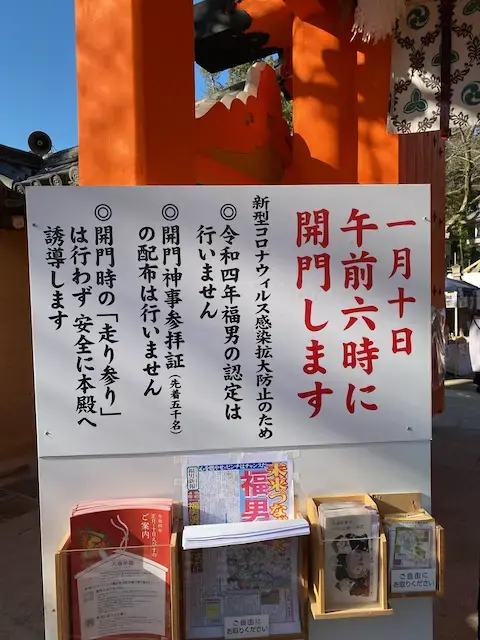
Speaking of Nishinomiya Shrine, the opening ceremony involves the selection of the lucky man. I find myself watching it more excitingly than watching a relay race. It’s so humane when the man falls on the last slope.
I also went to Kamide Shrine in Tarumi Ward, Kobe City. The observation deck was great.