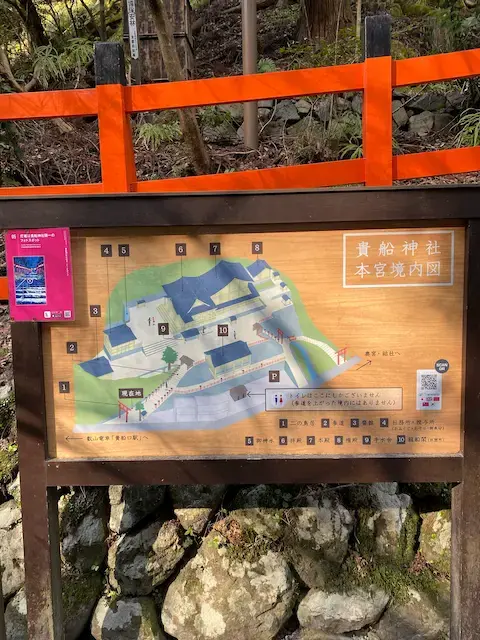
1、貴船神社。
<貴船神社>
鴨川の上流にあり、古来、京の水源を守る神様として信仰を集めている。平安時代の歌人・和泉式部の夫婦復縁が叶えられたという逸話が残り、縁結びのご利益を求める女性参拝者が後を絶たない。絵馬発祥の地としても有名。
<貴船の川床>
5~9月にかけて、貴船川沿いに立つ約20軒の料理旅館に川床が登場。川の真上に床が造られているので、食事とともにひんやり冷たい空気と川のせせらぎが楽しめる。
貴船は、やっぱり本宮へと続く87段の石段、参道、雰囲気抜群。駐車場は、停めれる台数少ないので注意が必要。
<Kifune Shrine>
Located upstream along the Kamo River, this shrine has long been revered as the guardian deity protecting Kyoto’s water sources. An anecdote remains from the Heian period about the poet Izumi Shikibu, whose wish for reconciliation with her husband was granted here. As a result, female worshippers seeking blessings for matchmaking continue to visit in endless numbers. It is also famous as the birthplace of ema votive plaques.
<Kibune’s River Terrace Dining>
From May to September, riverbed dining platforms appear at about 20 ryokan inns along the Kibune River. Built directly above the water, these platforms let you enjoy cool air and the sound of flowing water while dining.
Kifune Shrine truly shines with its 87 stone steps leading to the main shrine, the approach path, and its exceptional atmosphere. Note that the parking lot has limited capacity, so be prepared.
2、下鴨神社。
<下鴨神社(世界遺産)>
【絶対したいこと】
・生き続ける原生林・糺(ただす)の森を歩く。
・連理の賢木(れんりのさかき)で縁結びを祈願。
【楼門(ろうもん)】
糺(ただす)の森を抜けて、参道の鳥居をくぐると見えてくる華やかな朱色の門。檜皮葺(ひわだぶき)・入母屋造(いりもやづくり)で高さは13m。楼門から延びる西廻廊には葵祭で使われる剣の間があり、廻廊の内側には国宝の本殿2棟を含む多くの社殿が立つ。現在の門は寛永5年(1628)に建て替えられたもの。
【糺(ただす)の森】
下鴨神社の境内を覆うように茂る原生林。楠(くすのき)やムクノキなど約40種4700本の樹木が繁り、平安京遷都以前の貴重な植生を残す。国の史跡に指定されており、葵祭では行列の通り道にもなる。
古代の豪族・賀茂氏が祖先神として信仰したことを起源とする。京都きっての古社でありご祭神を祀る西殿と東殿は国宝にも指定されている。京都三大祭りの一つ・葵祭の舞台としても知られ・祭りで斎王代が身を清める御手洗池は、みたらし団子の名前の由来になったという説もある。
僕が行った時期は、2月だったので、梅の満開は見れなかったですが、ツボミは見れましたよ。
<Shimogamo Shrine (World Heritage Site)>
【Things I Absolutely Want to Do】
・Walking through the Tadasu Forest, a living primeval forest.
・Pray for a match at the sacred tree of intertwined branches.
【Gate】
Passing through Tadasu no Mori and passing under the torii gate of the approach path, a splendid vermilion gate comes into view. It features cypress bark roofing and an irimoya-style roof, standing 13 meters tall. The west corridor extending from the gate houses the Sword Room used in the Aoi Festival, while the inner corridor encloses numerous shrine buildings, including two National Treasure main halls. The current gate was rebuilt in 1628.
【Tadasu Forest】
The primeval forest that densely covers the grounds of Shimogamo Shrine. Approximately 4,700 trees of about 40 species, including camphor trees and Japanese ash trees, thrive here, preserving precious vegetation dating back to before the capital was moved to Heian-kyo. Designated a National Historic Site, it also serves as the procession route during the Aoi Festival.
Its origins lie in the ancient Kamo clan, who revered it as their ancestral deity. As one of Kyoto’s most venerable shrines, its West and East Halls, which enshrine the principal deities, are designated National Treasures. It is also renowned as the stage for the Aoi Festival, one of Kyoto’s Three Great Festivals. The Mitarashi Pond, where the festival’s Saio-dai (Imperial Princess) purifies herself, is said to be the origin of the name “mitarashi dango” (sweet rice dumplings).
I visited in February, so I didn’t get to see the plum blossoms in full bloom, but I did see the buds.

<source>my iphone.
<refarence>rurubu25kyoto.